Spanish ecommerce is no longer going through a historic phase of disruption, penetration or rapid growth. It is now fully established and behaves in a far more routine, predictable way. That is perhaps one of the clearest conclusions from the 2025 Annual Ecommerce Study by IAB Spain and Elogia. We are no longer looking at a market that is learning how to buy online; we are looking at a market that already buys online—with confidence. And that confidence forces sellers—especially those operating in marketplaces—to reach a new level of operational precision. Today’s consumer knows the rules of the game and demands excellence in buying and delivery. These have become non-negotiable conditions for winning online.
The data makes this clear: 77% of internet users aged 16 to 75 shop online, which translates into 27.4 million active buyers. Online shopping is neither sporadic nor impulsive—it is constant. On average, Spanish shoppers make 2.5 online purchases per month, and nearly eight out of ten buy online at least once a month. Spending patterns are also stable, with an average order value around €68, almost identical to the previous year.
This is the key point: when a market stabilises in number of buyers, purchase frequency and spending, it stops being a territory to conquer and becomes a territory to defend. And in such a market, what truly makes the difference is no longer creativity or brand storytelling, but the ability to execute: to be there when the customer wants to buy, and to sustain that availability without letting operations fall apart.
The Marketplace as the Dominant Ecosystem: Amazon Leads, and the Customer Keeps Coming Back
If buying online has become a habit, the next obvious question is: where does the customer buy? And here the study is unequivocal: marketplaces are the preferred channel. Within this category, Amazon is practically synonymous with online shopping. Eight out of ten buyers have purchased on Amazon in the past year—a figure far above brand-owned ecommerce or other marketplaces, both of which operate at roughly half that reach.
It’s not just that Amazon is popular; it’s that it is frequent. And frequency creates habit. Shoppers enter Amazon the way they enter their usual supermarket: they search, compare, read reviews, check delivery timelines and make decisions. The marketplace has become the place where purchases begin—and often end. And this context is especially demanding for sellers, because competing inside a deeply ingrained habit means having to deliver every single time: competitive prices, constant availability, flawless service and seamless logistics.
A Faster Buyer: Phone in Hand, Continuous Comparison and Growing Use of AI
The study also confirms that most online purchases now happen on mobile devices. That means the buying journey is more direct, faster and more prone to instant comparison. The everyday act of taking out a smartphone, opening Amazon, typing two words and swiping has become the standard behaviour of digital shopping.
Today’s key purchase drivers are convenience, breadth of assortment and—above all—price and promotions. When the study looks at how consumers use artificial intelligence in their decision-making, another revealing insight appears: among those who use AI, one of its main applications is comparing prices across brand-owned stores or marketplaces. What used to require opening three browser tabs can now be done by an assistant in seconds.
This acceleration of the decision process means shoppers are better informed than ever, compare more quickly than ever and are less tolerant of errors. For marketplace sellers, this translates into a simple truth: if you fail, it’s hard to get a second chance.
What the Study Doesn’t Show… But Every Seller Knows: Selling Doesn’t Mean Having Cash
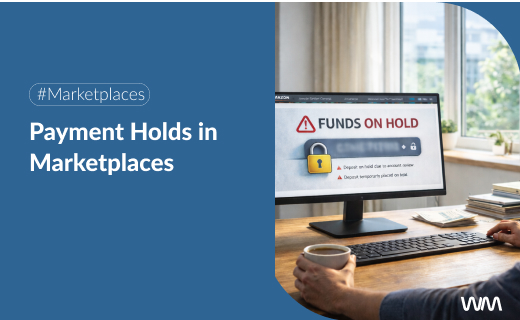
The report portrays the buyer with great precision, but there is another side of the ecosystem that doesn’t appear in any charts: the seller’s financial reality. And that reality is clear—you can have a product customers love, a strong catalogue, great reviews and daily sales, yet still feel that your cash flow is lagging behind.
Selling on marketplaces is paradoxical because costs arrive before revenue. Stock must be replenished before you get paid. Logistics must be funded before settlement. Advertising and visibility are paid in real time. Returns impact payouts. And very often, the business calendar and the cash calendar fail to align.
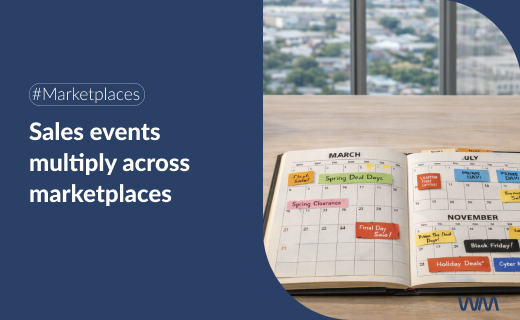
This becomes even more pronounced during peak periods. The study shows how events like Black Friday have become naturally embedded in consumers’ lives. A very high percentage of shoppers said they planned to buy during the event and expected significant discounts. In other words: waves of demand are real. But to ride those waves, one essential tool is required: liquidity. If the wave arrives but your inventory can’t keep up, the opportunity is lost. If the wave arrives and you have to pause campaigns due to lack of cash, the algorithm penalizes you. If the wave arrives and your supplier won’t deliver because you couldn’t prepay a strategic restock, the sale goes to another seller.
The Real Differentiator in 2025: Getting Paid Faster
In a mature market, with a highly skilled buyer and a dominant marketplace, competitive advantage no longer lies in having product, or even in having demand. It lies in the ability to respond to that demand without slowing down.
This is where a growing number of sellers are adjusting their mindset: you don’t scale when you sell—you scale when you get paid.
When you convert sales into immediate liquidity, everything changes: you replenish stock without stress, you negotiate better, you maintain stable campaigns, you sustain rotation in categories where windows of opportunity are short, you react quickly when a product gains traction, and you protect your operation during moments when the marketplace’s payout schedule—not the market itself—would otherwise hold you back.
Wannme: Accelerated Payouts for Marketplace Sellers Who Need Rhythm, Not Delays
At this point, Wannme fits naturally—not as a commercial add-on, but as an operational solution. The proposition is simple yet powerful: advance payouts for marketplace sellers, allowing them to turn pending settlements into instant working capital.
The goal is to empower a business that already works but is being held back by the marketplace payout cycle. It replaces waiting with capability. It transforms “theoretical growth” into actual, sustainable growth.
Wannme ensures that cash flow stops being a bottleneck and becomes what it should always be: the engine of your operation, not its brake. Want to know how we integrate with marketplace stores? Contact us here.