How Amazon’s expanding calendar of sales events is changing seller strategy
For years, the e-commerce calendar was relatively simple. For many online sellers, the year revolved around a few key moments: summer sales, Black Friday in November, and the holiday shopping season. These demand peaks concentrated a large share of annual sales and shaped how sellers planned their inventory, marketing, and operations.
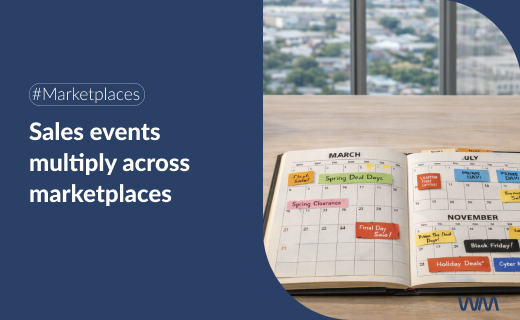
However, the calendar has evolved and become far more complex. Amazon has significantly expanded the number of promotional events it runs throughout the year. What used to be a handful of occasional campaigns is now turning into a continuous calendar of promotions designed to stimulate demand on a recurring basis.
Events such as Amazon Spring Deal Days, Prime Day, Prime Big Deal Days, and various seasonal campaigns are transforming how sellers organize their business on the marketplace. Increasingly, ecommerce is becoming a sequence of sales events spread across the entire year. For those selling on the platform, this shift fundamentally changes the rules of the game.
The rise of Amazon sales events
From Amazon’s perspective, the strategy makes perfect sense.
Concentrating demand around specific moments creates urgency among consumers. Shoppers know they can find meaningful discounts during these events, so they tend to wait for them before making certain purchases. In many ways, this model replicates what traditional retailers have done for decades with seasonal sales—only now at a global and digital scale.
A recent example is Amazon Spring Deal Days, a promotional event that takes place in March and offers thousands of discounts across categories such as electronics, home, beauty, and fashion.
In 2026, the event runs from March 10 to March 16, featuring deals on thousands of products from major brands and new offers launching several times per day. However, this event is only one piece of an increasingly crowded calendar.
Among Amazon’s main sales events are:
-
Spring Deal Days (March)
-
Prime Day (summer)
-
Prime Big Deal Days (October)
-
Black Friday and Cyber Monday (November)
Each of these moments attracts hundreds of thousands of shoppers ready to take advantage of deals. For consumers, this means more opportunities to buy products at discounted prices. For sellers, it means operating in a marketplace that is increasingly driven by promotional and seasonal events.
The impact of sales events on seller strategy
The growing number of commercial events is forcing Amazon sellers to rethink how they plan their business throughout the year.
Inventory planning
One of the biggest challenges is inventory management.
Promotional events tend to generate highly concentrated spikes in demand. If a seller underestimates demand and runs out of stock during an event, they risk losing not only immediate sales but also visibility within the marketplace.
This happens because Amazon’s algorithm rewards products with higher sales velocity. When a product goes out of stock during a key moment, it loses momentum and may struggle to regain its ranking in search results afterward.
For this reason, many sellers need to increase inventory levels ahead of major events. Doing so, however, introduces additional financial and logistical risk.
Advertising strategy
Another aspect that changes during these events is advertising on Amazon.
During campaigns such as Prime Day or Black Friday, traffic increases dramatically—but so does competition among sellers. As a result, advertising costs, particularly cost-per-click, tend to rise. Sellers therefore need to plan their campaigns and budgets more carefully.
In other words, selling during these events is not only about offering discounts, but also about competing for visibility in a more expensive advertising environment.
Pricing and promotion strategy
Promotional events also put pressure on sellers when it comes to pricing.
To stand out during these campaigns, many products need to offer meaningful discounts or participate in specific promotional formats such as Lightning Deals or Prime Exclusive Discounts.
These promotions can significantly increase sales volume, but they also reduce margins. Sellers must therefore strike a careful balance between boosting volume and maintaining product profitability.
The least visible challenge: cash flow
Behind all these operational decisions lies a factor that is often overlooked: cash flow.
When a promotional event generates a sudden surge in sales, sellers need to replenish inventory quickly to sustain their growth. However, the money from those sales does not usually arrive immediately.
Marketplaces typically pay sellers with some delay, while manufacturers and suppliers require upfront payments to produce and ship new inventory. This creates a financial gap that can become a bottleneck for growth.
The faster a seller grows during these events, the more capital they need to finance the next inventory cycle.
The new rhythm of marketplaces sales
The expansion of Amazon’s sales event calendar reflects a broader transformation in ecommerce.
Instead of relying on just a few major peaks throughout the year, marketplaces are now creating multiple moments of high demand spread across the calendar. This approach keeps consumers engaged, creates new commercial opportunities, and allows brands to accelerate their growth several times a year.
For sellers, the question is no longer whether they should participate in these events.
The real question is whether their business—from inventory planning to financing—is prepared to take advantage of them.
Want to learn how you can grow with the money from your sales available in your account every day? Contact our team and discover how to shorten your cash flow cycles.